Why you don't need experience for most projects
There's an urban myth in the casting industry: "you need experience to be considered." In reality, it's quite the opposite.
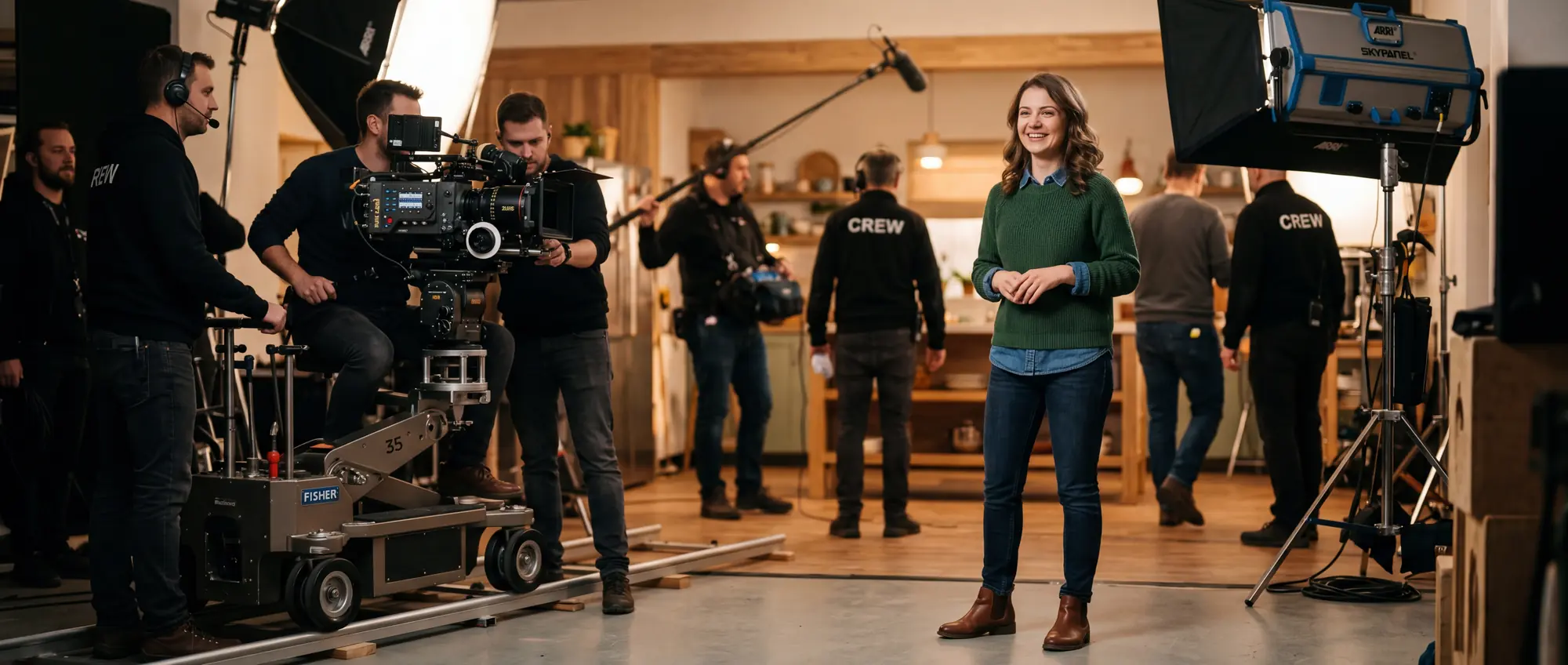
Most ad campaigns, music videos and even some film or TV productions look for "real people" — ordinary individuals who look authentic on camera. Not everyone has to be a professional actor. Sometimes, the very lack of experience is what makes the difference.
Brands want authenticity. They want people the audience can identify with. And that's exactly where you come in.
What does a casting director really look for?
1. Fit with the role
It doesn't matter how experienced you are if you don't fit the profile being looked for. If a brand is looking for a person around 30 years old, with a casual look and a warm smile, and you fit the description, your chances are higher than those of a professional actor in their 50s.
2. The ability to follow directions
If the team asks you to smile, to look in a certain direction or to hold a product a certain way, all you have to do is listen and follow through. You don't need to improvise or "play" something complex.
3. Naturalness
Many people without experience have an advantage: they aren't "trained" to force their expressions. If you can be yourself in front of the camera — relaxed, smiling, present — that's all that matters.
How to prepare for your first audition (without being an actor)
Step 1: Understand the brief
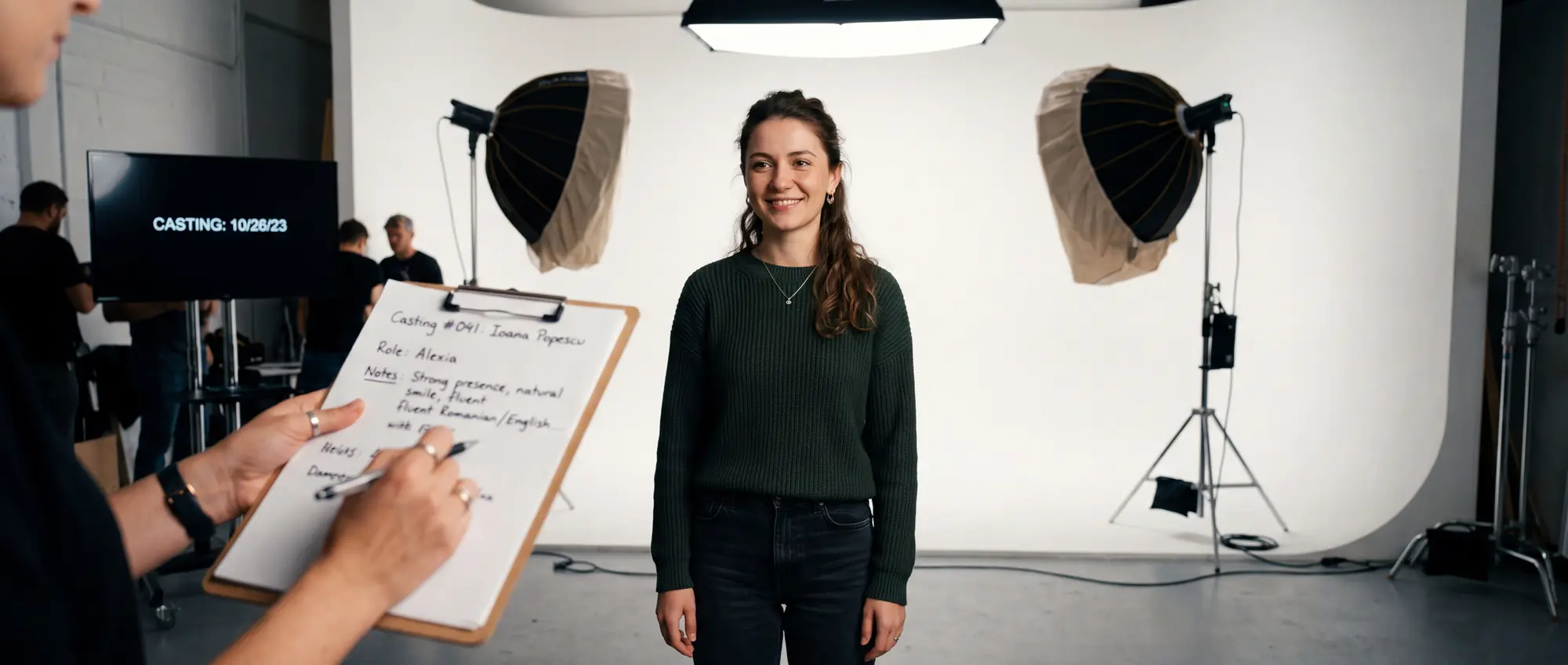
When you apply to an audition, you'll receive a description of the project. Read it carefully:
- What kind of person are they looking for?
- What do you have to do (speak, pose, perform something specific)?
- What mood do they want (relaxed, energetic, emotional)?
If you're a match for what they're looking for, go ahead. If not, don't push it — you'll waste time and leave a bad impression for the future.
Step 2: Prepare your materials
Usually, for an audition you'll need:
- Clear photos: At least 2–3 photos in which your face and body are clearly visible (not heavily posed, but natural).
- Contact details: Phone, email, possibly a social media account.
- Basic info: Age, height, city.
You don't need a professional CV or expensive studio photos for every project. Good photos taken with a phone, in natural light, can be enough.
Step 3: Be yourself
This is the most important piece of advice.
Don't try to look like someone else. Don't copy the style of actors from films. Don't overdo facial expressions or gestures.
Be natural. When the team asks you to smile, think of something that genuinely makes you happy. When you have to look surprised, imagine yourself in a real situation that would surprise you.
Authenticity always beats "forced acting" for projects looking for real people.
What happens on audition day?
Option 1: Online audition (self-tape)
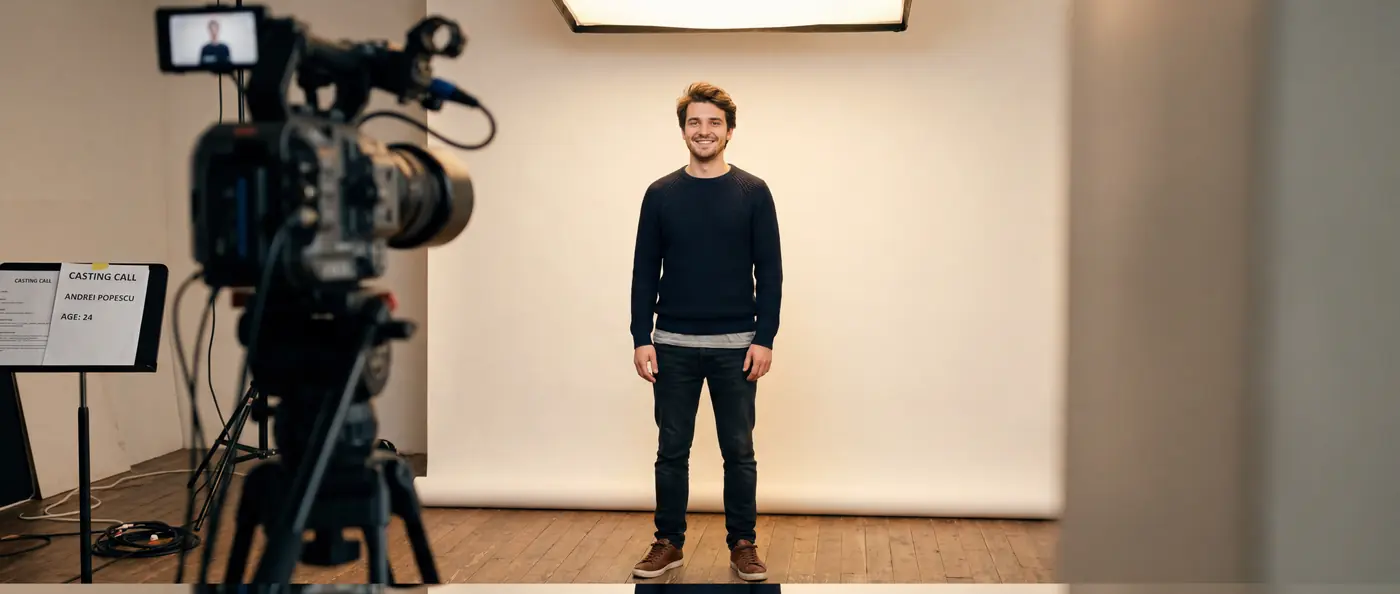
In many cases, you'll be asked to film a short video at home and send it in. Here's what to do:
Find a suitable location: A clean wall behind you (white or a neutral colour), good lighting (natural is ideal — near a window).
Use the phone on a tripod or steady support: Make sure the frame captures you from the shoulders up for close-ups and full body for those that need to see all of you.
Dress simply: Clothes without big logos, without loud prints (unless asked otherwise). Clean, casual style works almost every time.
Repeat the instructions received: If asked to introduce yourself, say your name, age, city and what you like to do. If you have to read a line or perform something, do it naturally, without rushing.
Record several takes: If you're not happy with the first try, try again. Send the version that feels the most relaxed and natural.
Option 2: In-person audition (live)
If you're invited to show up at a physical location, here's what to expect:
Arrive on time: Not 30 minutes early (so you don't look desperate), but not late either. 5–10 minutes before is perfect.
Be polite and smiling: The first impression matters a lot. Greet the team, be open, show that you're relaxed (even if you're not).
Listen to the instructions: The team will tell you exactly what to do: where to sit, where to look, what expression to have. Just execute with confidence.
Don't stress if you make a mistake: Smile and ask to do it again. Everyone makes mistakes — what matters is how you react.
What NOT to do at an audition if you have no experience
1. Lie about having experience
If you've never worked on a similar project, don't make up fake CVs. The team will pick up on it immediately. Instead, be honest: "This is my first experience, but I'm very excited to learn."
2. Apologise for the lack of experience
Don't open with "Sorry I'm not a pro" or "I don't know if this will be any good." Walk in confidently. If you were invited to the audition, someone thinks you fit.
3. Overdo it to compensate
Some people who have no experience try to compensate with broad gestures, forced voices or exaggerated expressions. Don't fall into that trap. Simplicity and naturalness are more valuable.
Examples of projects you can take part in without experience
- TV and online ads: Most brands are looking for real people, not actors.
- Photo campaigns for online stores: Clothes, cosmetics, home appliances — all need "everyday people" models.
- Music videos: Many productions need extras or simple supporting roles.
- Series and films (small roles / extras): You won't play the lead, but you can appear in the background or in group scenes.
- Corporate productions: Videos for companies, internal trainings, educational material.
How to improve your chances of being selected even without experience
1. Have a complete and up-to-date profile
If you register on a casting platform, fill in every field: clear photos, correct information, real availability.
2. Reply quickly to opportunities
Many casting calls have short deadlines. If you receive a notification, respond within hours (not days).
3. Show that you're reliable
If you confirm participation in an audition, show up. If you can't make it anymore, let them know in advance. Your reputation is built on small things.
4. Be open to feedback
If you get directions during an audition ("Try smiling less," "Speak more slowly"), don't get upset — it means they're trying to help you fit better.
Conclusion
You don't need acting classes, an impressive CV or years of experience to take part in an audition. All you need is to fit what the project is looking for, to be yourself, and to have the courage to try.
Most ad projects and many media productions are looking for exactly you — real, authentic people the audience can identify with. The only difference between those who appear in ads and those who don't is that some applied, and others didn't.
So: apply. Try. Even if you're not selected the first time, the experience will help you for the next opportunity. Every audition is a lesson. And who knows — maybe the next audition is exactly the one that will turn you from an "ordinary person" into a "familiar face."